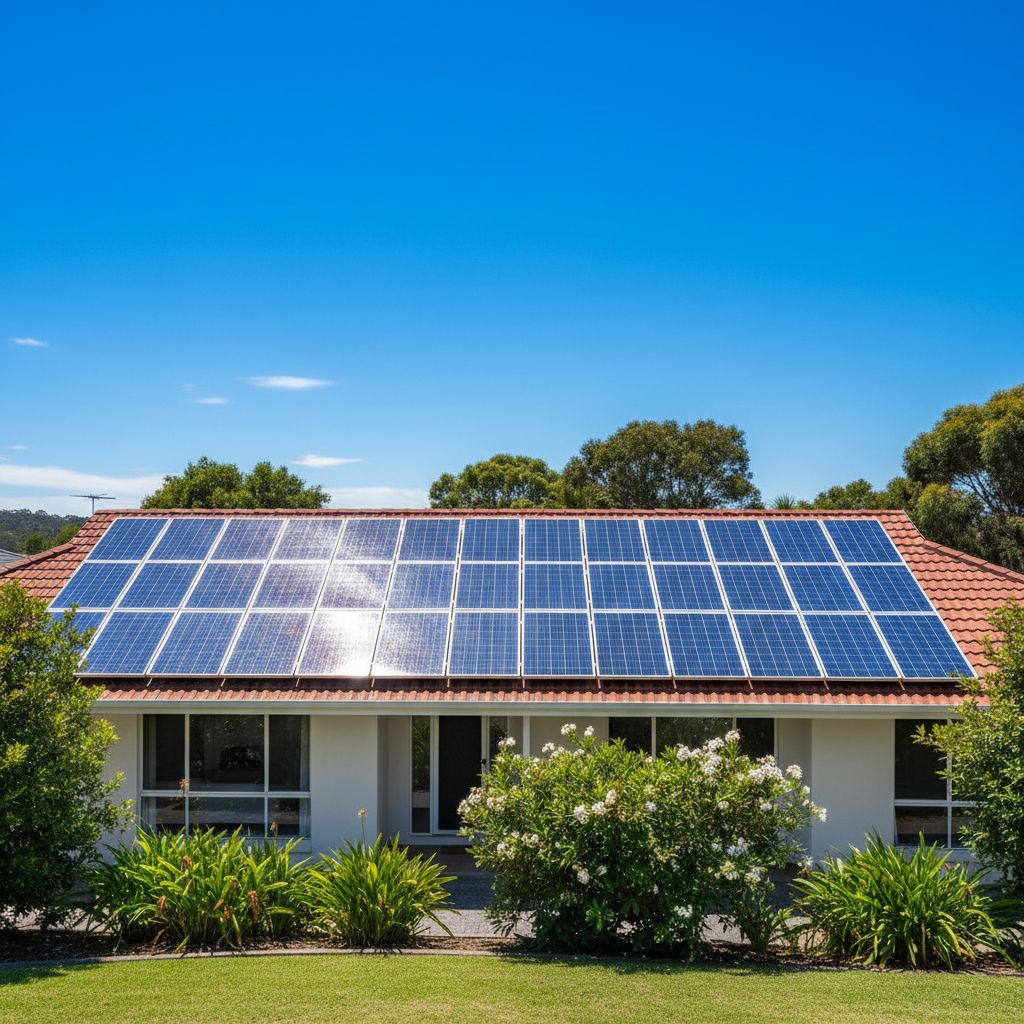
Bird & pest proofing for solar in Townsville.
The eastern and inner-Townsville suburbs — Idalia, Annandale, North Ward, Pimlico, Rosslea — host substantial Australian White Ibis, Straw-Necked Ibis and Little Corella populations. They love nesting under rooftop solar arrays. The droppings, nest debris and chewed cables are a major output killer and a real fire risk. A stainless mesh skirt blocks them out permanently.
What bird-proofing involves.
The Townsville bird problem.
The void between the rooftop and the underside of a tilted PV array is perfect ibis and corella nesting habitat — shaded, dry, protected from wind, perfectly sized. Pigeons get in too. Once nesting begins, three serious problems start:
- Acid droppings on panel undersides drip through gaps and damage the rooftop sealing membrane.
- Nest debris — sticks, leaves, feathers — accumulates and traps moisture against roof and array frames, accelerating corrosion.
- Chewed cables — corellas in particular love to chew exposed DC wiring. This is a real fire risk and has been the direct cause of multiple residential PV fires in North Queensland.
The fix — stainless mesh skirt.
We install a marine-grade 316 stainless steel mesh skirt around the full perimeter of the array. The mesh is sized to block birds (~10mm grid) while still allowing airflow under the panels (important for thermal performance — you don’t want to choke the underside ventilation). Attachment is via UV-stable nylon-coated stainless clips that grip the panel frame — no drilling, no fixings into panels, no warranty impact. The install takes half a day for a standard residential array.
Pre-install cleanout.
If birds are already nesting under the array, we do a full under-panel cleanout first — remove all nest material, accumulated droppings, dead birds, debris. Damaged DC cables are replaced (CEC-accredited electrician on the team). Roof-membrane damage from concentrated dropping spots is patched. Then the mesh skirt goes on so the birds can’t come back. This is a slightly longer job than a clean-install — full day for a standard array, sometimes two if the infestation has been there a while.
Material lifespan.
316 stainless mesh + UV-stable nylon-coated clips have a documented 15-20+ year lifespan in coastal Townsville conditions. The skirt outlasts the panels. We’ve got first-install Townsville jobs from 2014 still in original condition, no failures, no maintenance required. The annual panel clean does include a quick visual check of skirt condition at no extra cost.
Where bird-proofing is essential.
- Idalia, Annandale — Ross River corridor + Lakes precinct ibis traffic.
- North Ward, South Townsville foreshore — Strand parkland ibis, corella and seabird traffic.
- Pimlico, Hyde Park, Hermit Park — inner-city corella roosts in mango and fig trees.
- Any property within 500m of a known ibis or corella roost — the council has a known-roost map available on request.
- Any property that has had birds nesting under the array before — they almost always come back.
Pricing.
- Material + install: $20-$35 per linear metre of array perimeter.
- Standard residential 5-6.6kW array: typically 18-26m perimeter = $400-$900 total.
- Larger 10kW+ array: $700-$1,400.
- Pre-install cleanout (if birds already nesting): +$200-$500 depending on infestation.
- Cable repair (if chewed): quoted on site — CEC-accredited electrician on team.
Where we work.
Book bird-proofing for your array.
316 marine-grade stainless mesh. UV-stable clips. No drilling, no warranty impact. 15-20 year lifespan.